The leading robot-assisted implant center in the Bay Area, providing accurate implant placement

Missing teeth changes daily life faster than most people expect. Favorite foods become harder to chew. Words do not sound as clear. The jawbone begins to weaken without tooth roots to stimulate it. Over time, neighboring teeth shift out of position, and facial support gradually reduces.

Dental Implants at Pannu Dental Group are designed to restore more than a smile. They restore bite strength and long-term stability. Using digital treatment mapping and Yomi robotic-guided precision, every implant is placed with accuracy and long-term function in mind.

Patients across San Jose, Cupertino, Fremont, and Sunnyvale choose implant dentistry for permanent results instead of temporary fixes.

If you are ready to regain full function and confidence, schedule your dental implant consultation today with Pannu Dental Group and receive a personalized treatment plan built for lasting results.

What Are Dental Implants?

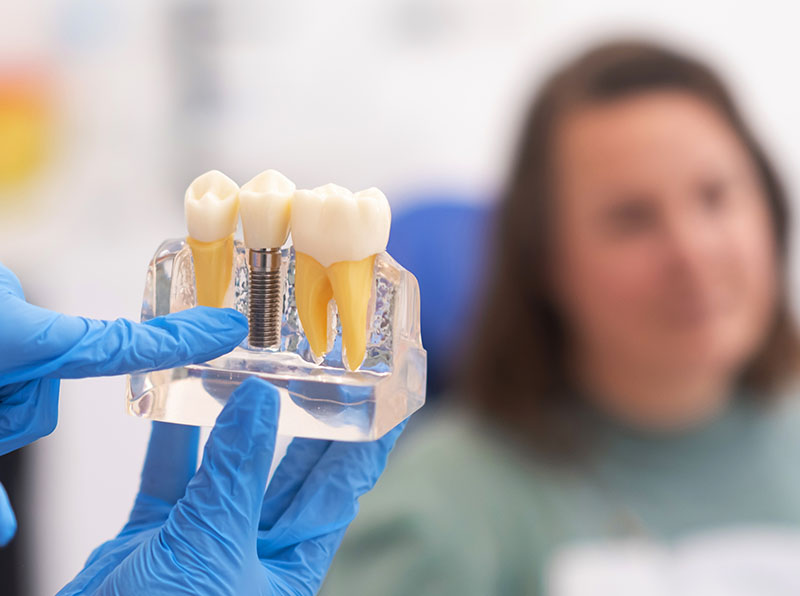
A dental implant replaces a missing tooth root with a titanium post placed into the jawbone. The implant fuses with bone through osseointegration, forming a stable base for a crown, bridge, or full arch prosthesis. 

Components of a Dental Implant

  • Titanium implant post placed within the jaw
  • Abutment connecting the implant to the restoration
  • Custom crown, bridge, or full arch prosthesis

Unlike removable options, implants restore both root and crown structure, preserving bone and bite force.

How Do Dental Implants Work

Implant Denture Treatment Timeline

Tooth loss occurs at various stages of a person’s life. Some people lose a tooth due to trauma. Others have failing bridges, advanced decay, or unstable dentures. Dental implants are meant for patients who desire strength, stability, and a fixed solution rather than removable ones.

Dental implants are recommended for patients who:

  • Have one or more missing teeth and want a permanent replacement
  • Wear loose partial dentures or full dentures that shift while eating or speaking
  • Have trouble chewing hard foods like meat, nuts, or raw veggies
  • Have experienced bone loss due to the absence of teeth for a prolonged period
  • Are looking for a non-removable solution to dentures
  • Are seeking clearer speech without the movement of dentures
  • Patients in California who are looking for a non-removable solution to dentures often turn to implants.

Types of Dental Implant Solutions

Implant therapy is not identical for every patient. The number of missing teeth, bone density, bite alignment, and long-term expectations determine the most appropriate solution. Each option is carefully planned using 3D imaging and digital mapping.

Single Tooth Implant

A single tooth implant is used to replace a missing tooth without impacting healthy teeth adjacent to the missing tooth. The titanium rod is fully integrated with the jawbone and holds a custom-made crown that matches the adjacent teeth in color, shape, and bite position.

Implant-Supported Bridge

For a series of missing teeth, an implant-supported bridge is used to fill the space without crowning healthy teeth. Two or more implants are used to support a fixed bridge that evenly distributes the chewing forces throughout the dental arch.

All-on-4 Dental Implants

All-on-4 treatment uses four strategically positioned implants to support a full arch of fixed teeth. The posterior implants are angled to maximize available bone and often reduce the need for grafting. This approach provides full-arch stability with fewer implants while maintaining strength and functional support.

All-on-6 Dental Implants

The All-on-6 dental implant system relies on six implants in the arch for better load support and reinforcement. The extra implants are useful for people with heavy biting force or those who require the most stable full arch restoration.

Implant-Supported Dentures

Implant-supported dentures are more stable than removable dentures but can still be removed. The dentures are secured to a set of implants in the jaw using special attachments. The dentures are much more stable than the removable kind.

Benefits of Dental Implants

Dental implants offer structural, functional, and long-term advantages over removable tooth replacement options. Because they replace the root as well as the crown, they provide both strength and biological support.

Long-Term Stability

The implants osseointegrate with the jawbone, creating a stable base that resists movement. This allows the dental restoration to function like natural teeth for a long time with proper care.

Bone Preservation

Without teeth, the jawbone will deteriorate due to a lack of stimulation. The implants distribute the chewing force to the jawbone, preserving its density over time.

Strong Chewing Force

The implants allow patients to have a strong chewing force. They can now chew a variety of foods without worrying about slipping, pressure points, or adhesives.

Natural Appearance

Customized dental restorations are designed to mimic the natural color and translucency of enamel. The dental restoration blends in with the surrounding teeth and helps maintain natural facial proportions.

Improved Speech

Loose dentures can hinder speech. The fixed dental implant helps patients speak clearly without clicking or shifting.

Protection of Adjacent Teeth

Unlike traditional bridges, dental implants do not require grinding down adjacent teeth. This helps preserve healthy enamel and prevents long-term structural damage.

How Dental Implants Are Done

Implant treatment follows a structured, step-by-step protocol designed for precision and long-term success. Advanced diagnostics guide each stage to ensure safety and predictability.

Consultation and 3D Imaging

A comprehensive examination is performed, including digital X-rays and 3D CBCT imaging. These scans evaluate bone volume, nerve positioning, sinus anatomy, and overall oral health. This phase determines candidacy and identifies whether grafting or additional preparation is required.

Digital Planning

Specialized implant planning software maps the ideal implant angle, depth, and position. This digital blueprint ensures optimal load distribution and prosthetic balance. Treatment sequencing, healing time, and restoration design are finalized during this stage.

Implant Placement

Titanium implants are surgically placed into the jawbone under local anesthesia or sedation. Precise placement minimizes trauma and promotes predictable healing. In selected cases, temporary restorations are placed on the same day to maintain appearance and function.

Healing Phase

Over three to six months, the implants integrate with the jawbone through osseointegration. During this period, the bone forms a stable bond around the implant surface, creating a secure foundation for the final restoration.

Final Restoration

After successful integration, impressions or digital scans are taken to fabricate the custom crown, bridge, or full-arch prosthesis. The final restoration is securely attached, restoring full chewing function, aesthetics, and structural support.

How to Care for Dental Implants

For the long-term success of the implant, regular hygiene practices and monitoring are necessary. Implants do not decay, but the surrounding gum tissue must be cared for regularly.

  • Daily Hygiene Practices: Brush the teeth gently with a soft-bristle brush and non-abrasive toothpaste. Be cautious around the gumline and floss around the restorations.
  • Water Flossers: Water flossers are useful for removing debris around the implants and bridges where regular flossing is not possible.
  • Professional Care: Regular visits to the dentist every three to six months are necessary for monitoring and professional cleaning to maintain bone and gum health.
  • Use of Night Guard: Patients who grind their teeth should use a night guard to prevent excessive pressure on the implants.

Dental Implant Timeline

Healing time varies based on bone density and systemic health.

Stage

Estimated Duration

Consultation

45–60 minutes

Implant Surgery

1–3 hours

Healing

3–6 months

Final Restoration

2–3 weeks after healing

Cost of Dental Implants

A detailed estimate is provided after imaging and clinical evaluation.

Treatment Type

Estimated Range

Single Implant

$3,000 – $6,000

Implant Bridge

$6,000 – $15,000

All-on-4

$18,000 – $30,000 per arch

Bone Grafting

$500 – $3,000

Dental Financing Options

Our staff partners with third-party financing companies that provide competitive interest rates and flexible repayment schedules based on individual approval. During your consultation, a comprehensive treatment plan is discussed so you can understand all aspects of treatment before making a decision. Qualified patients can finance their treatment by breaking down costs into manageable monthly payments.

Insurance verification services are also available. Our administrative staff reviews your benefits, discusses the limitations of your coverage, estimates your out-of-pocket expenses, and explains your payment options before treatment. Pannu Dental Group provides financing options for implant treatment.

Payment Options and Affordable Plans

Cash

Check

Debit &
Credit

FSA

Accepted Payments

We accept cash, personal checks and major credit cards such as Visa, MasterCard and American Express.All fees are presented in writing and explained thoroughly so you can make informed decisions.

Financing Plans

 Our partnerships with CareCredit and Unicorn Financial allow you to finance treatments with interest‑free options and extended payment terms up to 48 months.

Insurance Processing

We accept most insurance plans and handle claim submissions. Our staff works to maximize your benefits and reduce out‑of‑pocket expenses.

Meet the Implant Team at Pannu Dental Group

Dr. Dalvir S. Pannu

Dr. Dalvir S. Pannu has been practicing dentistry since 1995 and brings decades of clinical experience to advanced implant treatment across California. After opening his first dental practice in 1996, he quickly gained recognition for his skill and clinical precision. In 1997, he was invited to give a table clinic on Endodontics at the annual session of the American Dental Association in Washington, D.C., which shows his early professional excellence.

Dr. Pannu has done specialized training in implant surgery and restoration, which enables him to do both surgical implant placement and final prosthetic reconstruction.

This allows for continuity of care, precision of structure, and long-term functional results for patients undergoing dental implant placement, including full arch solutions. His approach combines digital planning, surgical accuracy, and restorative balance to deliver stable, predictable implant results.

Why Choose Pannu Dental Group for Dental Implants?

The selection of the appropriate implant service provider has a direct impact on the success of the surgery. Pannu Dental Group brings together the latest technology and a coordinated team of professionals to ensure predictable results for implant surgery in California.
  1. Yomi Robotic Precision: The robot-assisted implant center in the area, providing accurate implant placement.
  2. Advanced 3D CBCT Imaging: High-definition imaging for enhanced safety during surgery.
  3. Multidisciplinary Team: A coordinated approach to patient care by the implant, restorative, and orthodontic teams.
  4. Structured Treatment Planning: A written plan detailing the process, cost, and timeline.

Schedule Your Dental Implant Consultation

Tooth loss affects nutrition, speech, and confidence. A permanent solution is available. Pannu Dental Group provides advanced Dental Implants in CA with digital planning and robotic precision.

Contact the location nearest you in San Jose, Cupertino, Fremont, or Sunnyvale to schedule your consultation and receive a comprehensive treatment plan.

FAQs

How long do dental implants last?
With proper hygiene and routine evaluations, implants can function for decades. Restorations may require maintenance over time.
Local anesthesia is used to make the process painless. Sedation is available to help with relaxation during surgery.
Brushing twice daily, flossing around implant restorations, and regular professional cleanings are necessary to maintain dental implants.
Implants provide fixed stability, stronger bite force, and improved long-term bone preservation compared to removable dentures.